
The Elusive Grey Breasted Partridge: An East Javan Endemic
The high-altitude montane forests of East Java harbour several of the most sought-after avian species in the Sundaic region. Among these, the Grey Breasted Partridge (Arborophila orientalis) stands as a primary target for visiting ornithologists and serious birdwatchers. This ground-dwelling bird is endemic to the mountain ranges of East Java, making the Ijen Plateau one of the most reliable locations to observe this species in its natural habitat. For those planning a trip to the region, our tailored East Java birdwatching package #1 provides a focused itinerary to locate this secretive forest resident.
Identification and Key Characteristics of Arborophila orientalis
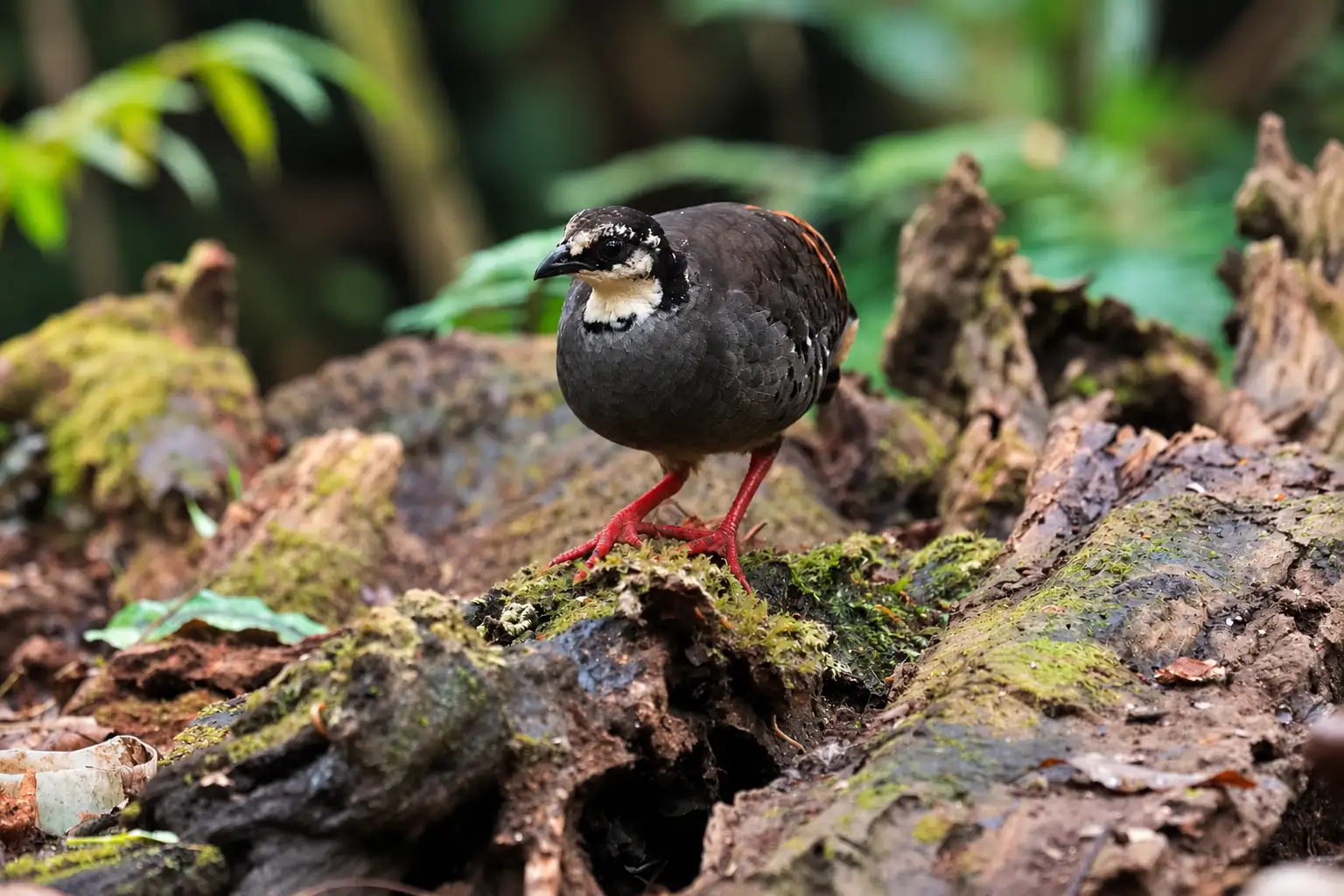
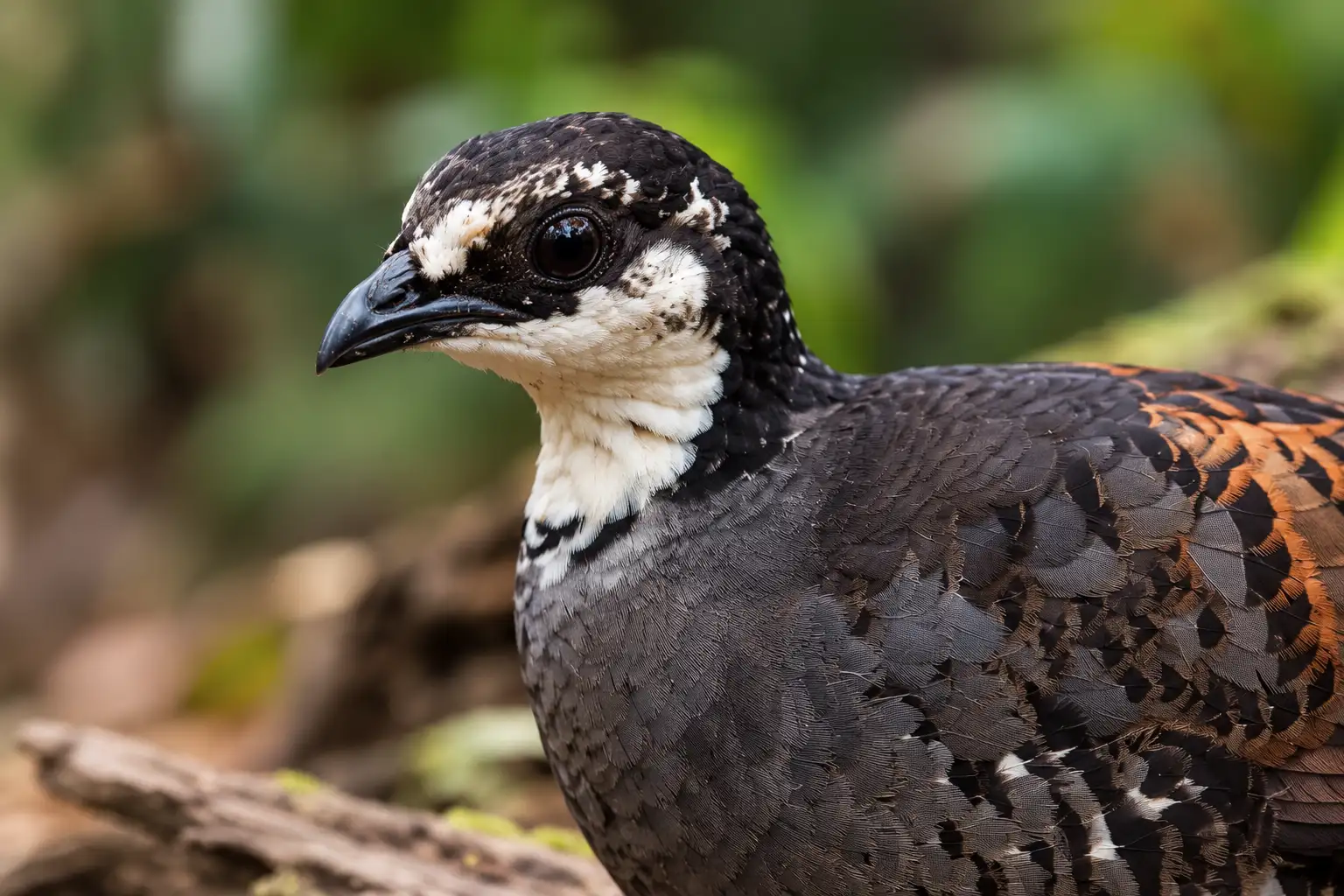
Identifying the Grey Breasted Partridge requires a keen eye for detail, as it often blends seamlessly into the leaf litter of the forest floor. Measuring approximately 28 centimetres in length, this partridge species displays a distinctive combination of features. The most prominent is the namesake grey breast, which contrasts with the intricate black-and-white barring on the flanks and the rufous-brown upperparts.
The facial pattern is equally striking, featuring a white throat and a dark crown, often accompanied by a pale supercilium. When analysing the Grey-breasted Partridge in the field, observers should note the stout bill and the reddish-pink legs, which are typical of the Arborophila genus. In the dim light of the Ijen highland forest, these features can be challenging to spot without high-quality optics or a professional guide familiar with their specific movements.
Grey Breasted Partridge Distribution and Habitat
The Grey Breasted Partridge Indonesia distribution is strictly limited to the mountain massifs of East Java. It is primarily found in tropical montane forests at elevations ranging from 1,000 to 2,200 metres above sea level. This bird prefers dense undergrowth and primary forest where the ground is covered in thick humus and leaf litter, providing ample foraging opportunities for seeds, fallen fruit, and small invertebrates.
At Ijen National Park, the Grey Breasted Partridge bird occupies the slopes where the temperature remains cool and the moisture levels are high. This habitat is shared with other significant endemics such as the Javan Trogon (Apalharpactes reinwardtii) and the Javan Whistling-Thrush (Myophonus glaucinus). Understanding the specific micro-habitats within these mountain forest birds’ range is essential for a successful sighting.
Behaviour and Vocalisation in the Field
Like most members of its family, the Grey Breasted Partridge is predominantly terrestrial. It is usually encountered in pairs or small family groups, moving quietly through the understorey. They are notoriously shy; at the first sign of danger, they prefer to run through the vegetation rather than take flight. This behaviour makes Grey Breasted Partridge birdwatching a game of patience and stealth.
The vocalisation of the Grey-breasted Partridge is a series of rhythmic, rising whistles, often delivered in a duet between a pair. This call is most frequently heard during the early morning hours before the mist clears from the Ijen forest. Recognising these calls is the most effective way to pinpoint their location before attempting a visual confirmation or bird photography.
The Ijen Highland Forest: A Biodiversity Hotspot
Birding in East Java is not complete without exploring the volcanic slopes of Mount Ijen. This region serves as a vital refuge for Indonesian endemic birds. While searching for the Grey Breasted Partridge Ijen population, photographers often encounter several other high-priority species. The list of residents includes the majestic Javan Hawk-Eagle (Nisaetus bartelsi), the colourful Javan Banded Pitta (Hydrornis guajanus), and the Pink-headed Fruit-Dove (Ptilinopus porphyreus).
The Ijen birding tour experience also offers chances to see the Dark-backed Imperial-Pigeon (Ducula lacernulata), Javan Frogmouth (Batrachostomus javensis), Mees’s White-eye (Zosterops melanurus), and the Javan Bulbul (Ixos virescens). Our tailored East Java birdwatching package #2 allows for an extended exploration of these different altitudinal zones, increasing the probability of a multi-species encounter.
Conservation and Birding Ethics
The Grey Breasted Partridge Java population is currently classified by the IUCN as Vulnerable, primarily due to habitat loss and the pressure of the cage-bird trade. Conservation efforts in East Java focus on protecting the remaining tracts of primary montane forest. As wildlife journalists and guides, we emphasise the importance of ethical birding—maintaining a respectful distance and avoiding the excessive use of playback, which can stress these territorial birds.
By choosing a professional Ijen birding tour, visitors contribute to the local economy and support the protection of these fragile ecosystems. Documenting the Grey Breasted Partridge Ijen National Park sightings through platforms like eBird helps researchers track population trends and range shifts, which is vital for long-term survival strategies.
Frequently Asked Questions
Where is the best place to see the Grey Breasted Partridge?
The Grey-breasted Partridge is best observed in the montane forests of East Java, specifically within the Ijen National Park and the surrounding highland forests. The birds are most active at dawn along quiet forest trails.
What does the Grey Breasted Partridge sound like?
The call is a series of clear, ringing whistles that increase in tempo and pitch. It is often described as a melodic, repetitive “hooit” or “weet” sound, frequently performed as a duet by a mated pair.
Is the Grey Breasted Partridge endemic to Indonesia?
Yes, the Grey Breasted Partridge (*Arborophila orientalis*) is strictly endemic to the island of Java, specifically the eastern provinces. It is one of the key indicator species for the health of Java’s mountain forest ecosystems.
What is the best time of year for birdwatching in Ijen?
The dry season, typically from May to September, offers the best conditions for navigating forest trails. However, bird activity remains high year-round, with many species being more vocal at the start of the breeding season.
Book Your Ijen Birding Adventure
Ready to add the Grey Breasted Partridge to your life list? Ijen Birding Tour provides expert guidance and logistics for photographers and ornithologists seeking the rarest birds of East Java.
Contact Information:
WhatsApp: +6281336765793
Email: ijenbirdingtour@gmail.com
Tour Details: 1-Day Mount Ijen Birding Tour